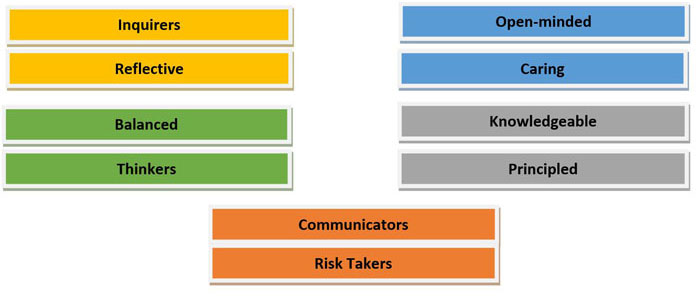
The International Baccalaureate (IB) learner profile describes a broad range of human capacities and responsibilities that go beyond academic success.
They imply a commitment to help all members of the school community learn to respect themselves, others and the world around them.
Each of the IB’s programmes is committed to the development of students according to the IB learner profile.
The Learner profile aims to develop learners who are:
The International Baccalaureate Diploma Programme is a rigorous pre-university course of study that leads to examinations, for highly motivated secondary school students. It is a comprehensive two- year curriculum that generally allows students to fulfil requirements of various national education systems. IB Diploma holders gain admission to universities in India and throughout the world, including the most elite.
The IB Diploma model incorporates the best elements of several national systems, without being based on any one. Responsibility for all academic judgements about the quality of candidates’ work rests with more than 4000 examiners worldwide, led by chief examiners with international authority in their fields.
AIU (Association of Indian Universities) accept IB Diploma results for entry into Indian colleges and universities after the diploma (i.e. after Grade 12).
IB Diploma is recognised worldwide by reputed universities around the world.
The subject groups are as follows:
As part of the Diploma Programme (DP), students take at least one subject from studies in language and literature. English A: Language and Literature.
It is a requirement of the diploma programme that all students study at least one subject from group 2. The principal aim for the subjects in group 2 is to enable students to use the language in a range of contexts and for many purposes; the courses focus on written and spoken communication.
Second language learners with previous experience can study language B. Beginners with no previous experience in a particular language can study that language at the Ab initio level.
All diploma candidates are examined in a second language.
Students are required to choose one subject from each of the six academic areas,
Studying any one of these subjects provides for the development of a critical appreciation of:
Business Management, Economics, Geography, Global Politics, Philosophy, History, Psychology, Information technology in a global society (ITGS), social and cultural anthropology, world religions [SL only]
Students are required to choose one subject from this group
The subjects available in group 4 are: Biology, Chemistry, Physics, Computer Science and Environmental Systems and Societies.
Students can only study one course in Mathematics.
All DP Mathematics courses serve to accommodate the range of needs, interests and abilities of students, and to fulfil the requirements of various university and career aspirations.
This includes Visual Arts, with emphasis placed on practical production by the student and exploration of a range of creative work in a global context.
At DYPIS, we offer the following subjects as part of the IB Diploma Program:
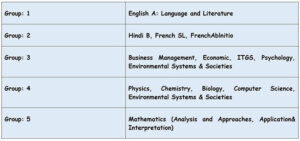
All the above subjects (except French Ab Initio and French SL) shall be offered at two levels – Higher Level and Standard Level. French Ab Initio shall be offered at Standard Level only.
Diploma students shall be required to take one subject from each of the first 5 groups and select an additional subject either from Group 6 or from Group 3/ Group 4. Three of the subjects need to be taken at a Higher Level and three at a Standard Level.
Therefore, students need to keep in mind their future career aspirations while selecting the subjects and the levels. The school shall assist the child and the parent in this regard.
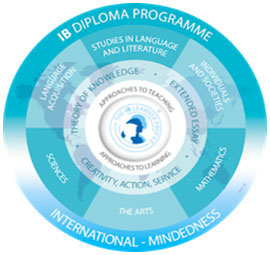
The Diploma programme is displayed with the six academic areas surrounding the core (TOK, CAS & EE)
In the Diploma programme six academic subjects are studied concurrently and students are required to study both the Humanities and the Sciences. Diploma candidates must select one subject from each of the six groups, although a second subject from groups 3 or 4 may be substituted for group 6. Three of these are taken at a higher level (HL), while the others are standard level (SL): HL courses represent a minimum of 240 teaching hours, SL courses cover 150 hours. Students are thus able to explore some subjects in depth and others more broadly, a deliberate compromise between the early specialisation of some national systems and the breadth found in others. A science-oriented student is challenged to learn a foreign language and a natural linguist becomes familiar with laboratory procedures.
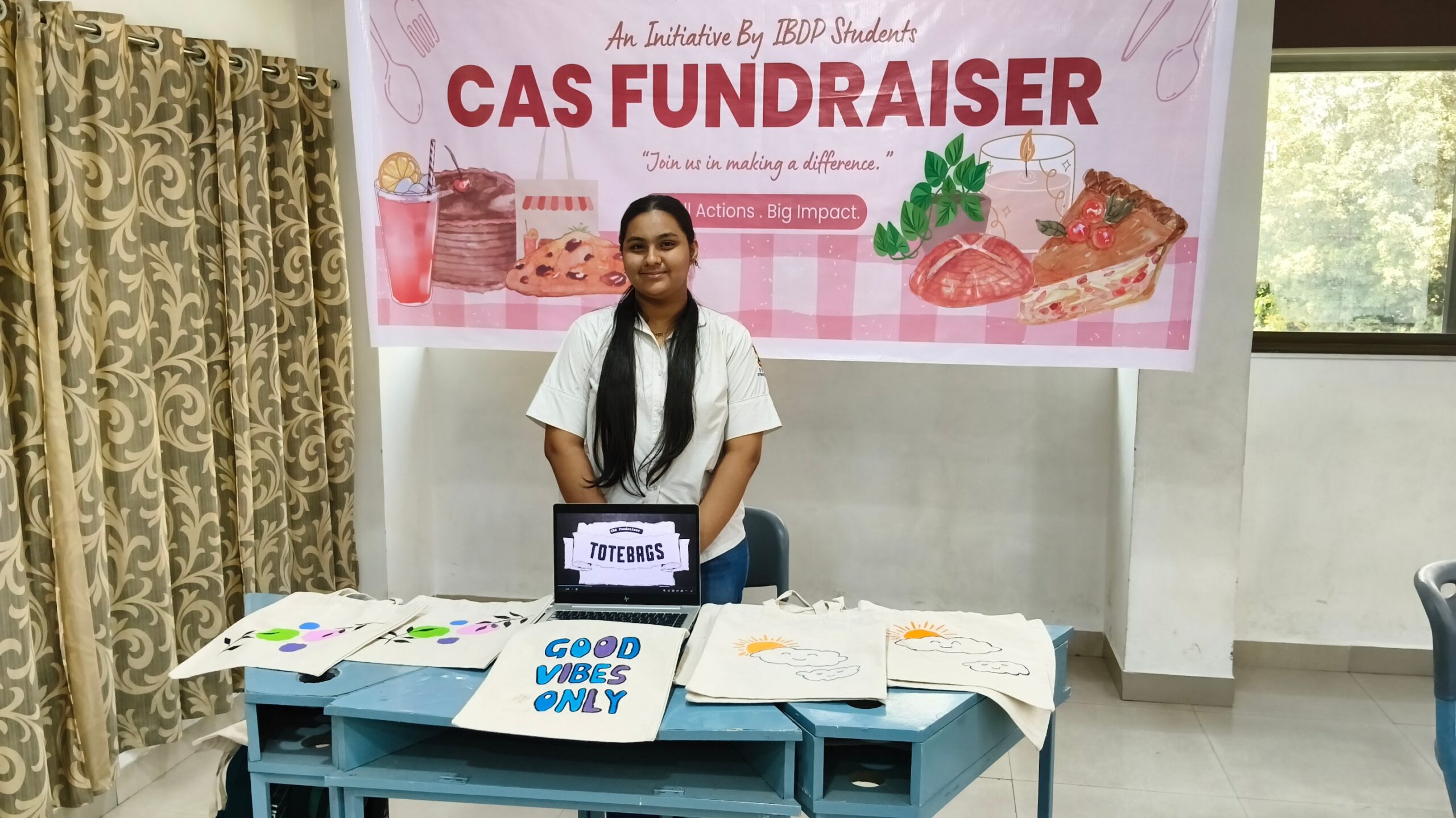
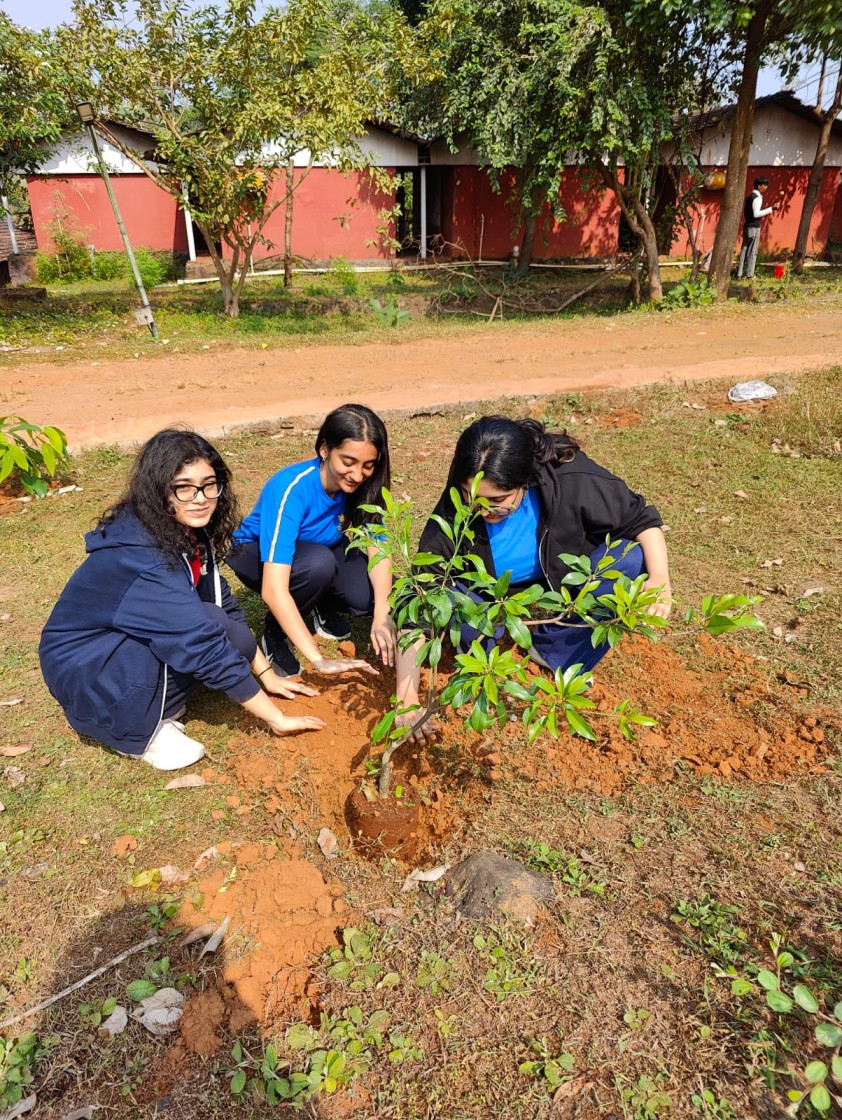
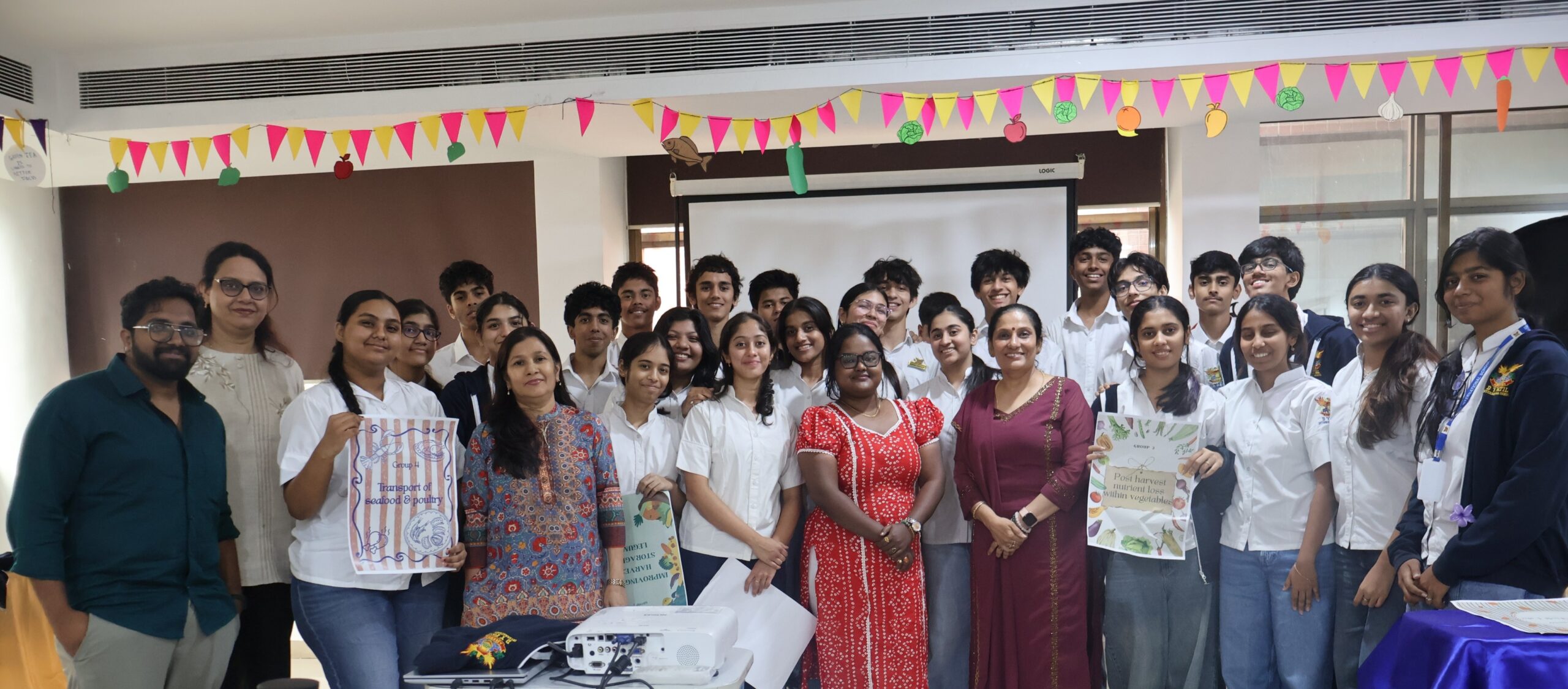
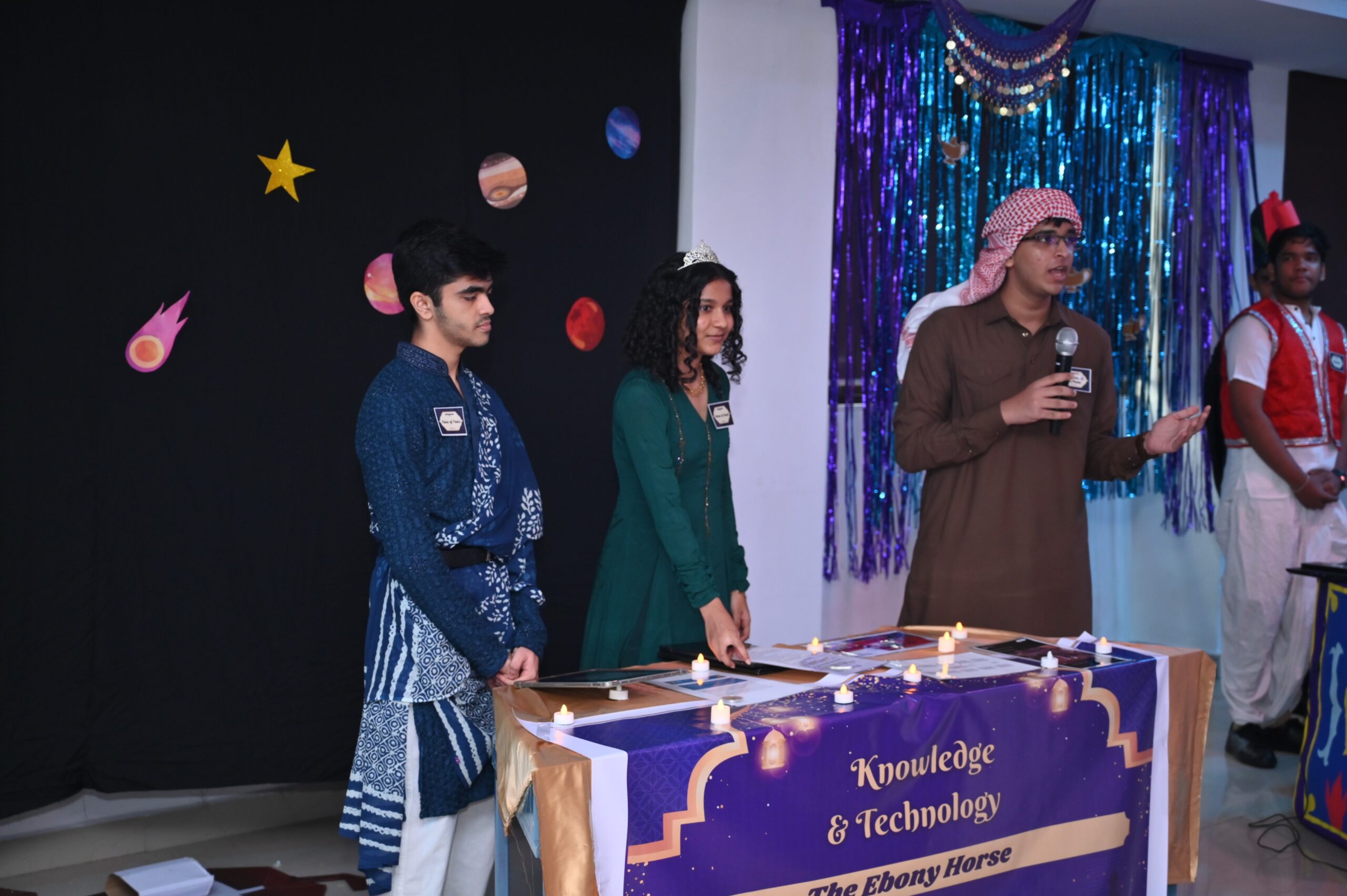
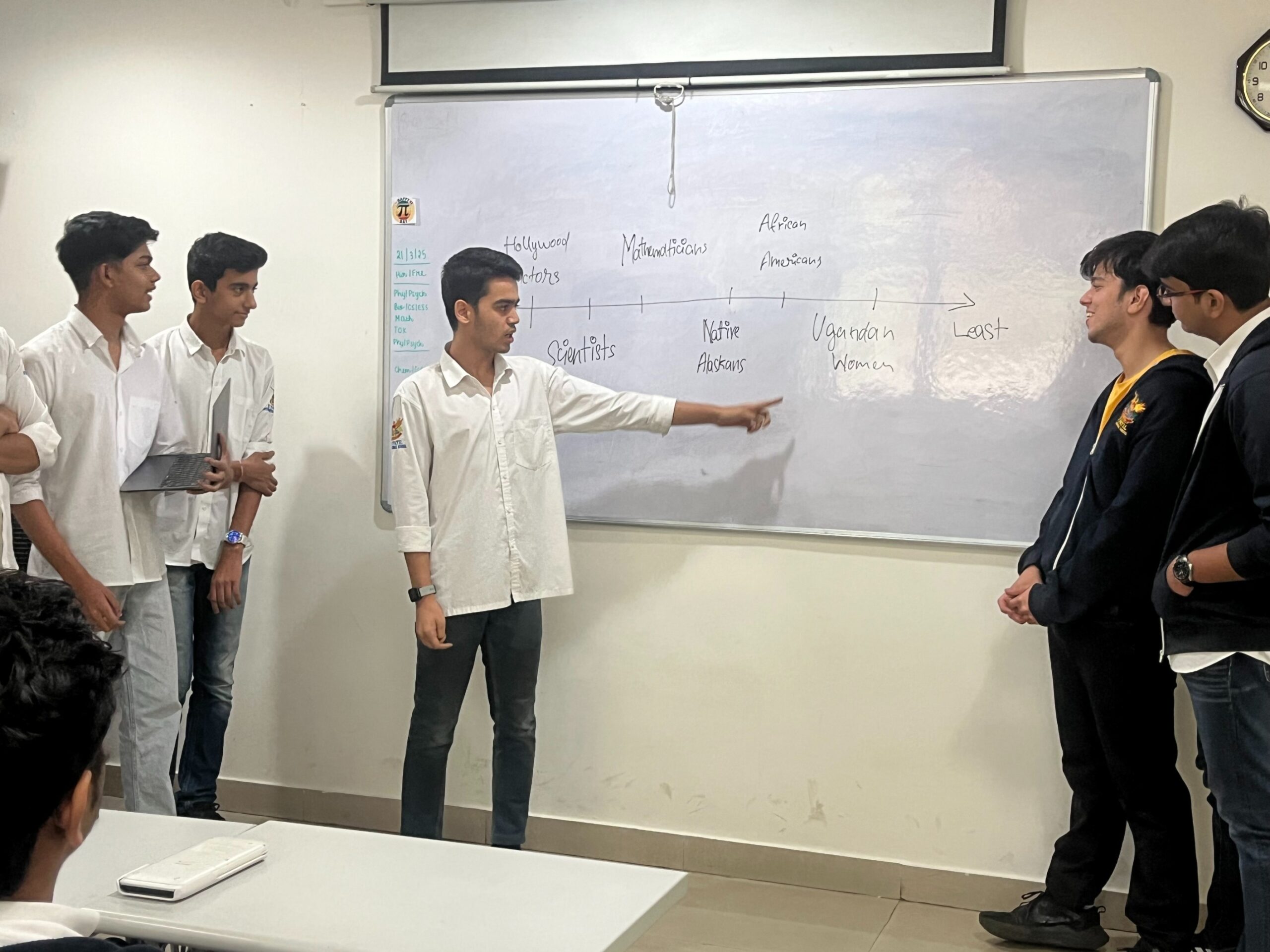
Our IB Diploma students have received offers from some of the leading universities in the U.S.A., U.K., Canada, Australia, Singapore and India.
Each examined subject is graded on a scale of 1 (minimum) to 7(maximum). The award of the diploma requires students to meet defined standards and conditions including a minimum total of 24 points and a satisfactory completion of the Extended Essay, Theory of Knowledge course (TOK) and CAS (Creativity/, Activity, Service) activities. The maximum score of 45 includes three points for the combination of the Extended Essay and TOK.
IB Diploma holders gain admission to universities throughout the world. These include well-known Indian, European and American institutions such as llT’s, University of Mumbai, Oxford, Cambridge, UCL , Imperial College, Yale, Harvard, Stanford, and MIT to name a few.
The Career Counsellor at DYPIS works with classes and students individually to plan their academic path through the IB Diploma Programme. During the 11th and 12th grades, the Career Counsellor will work with all our students in preparing them for the next phase in their lives, which most often includes applications to overseas colleges and universities, under – graduate programs or exploration of career options.